
What an AI Animation Class Taught Us
Over the past few weeks, I have been spending a lot of time making AI animations with children.
At first, I thought the most interesting part would be the technology. After all, it is now possible to turn a simple idea into moving images within minutes. Compared with the stop-motion animation projects we used to run, the process feels almost magical.
But as the course progressed, I realized that the most interesting part was not the AI.
It was the children.
最近幾週,一邊寫書法一邊花一點時間陪孩子們一起製作 AI 動畫。
原先,我以為最有趣的部分會是 AI 本身。畢竟現在只要有一個想法,透過幾段文字描述,就有機會在短時間內生成一段動畫。和過去需要逐格拍攝的動畫課程相比,這樣的過程甚至帶著一點魔法般的感覺。
但課程進行了一段時間之後,我慢慢發現,最有趣的其實不是 AI。
而是孩子。
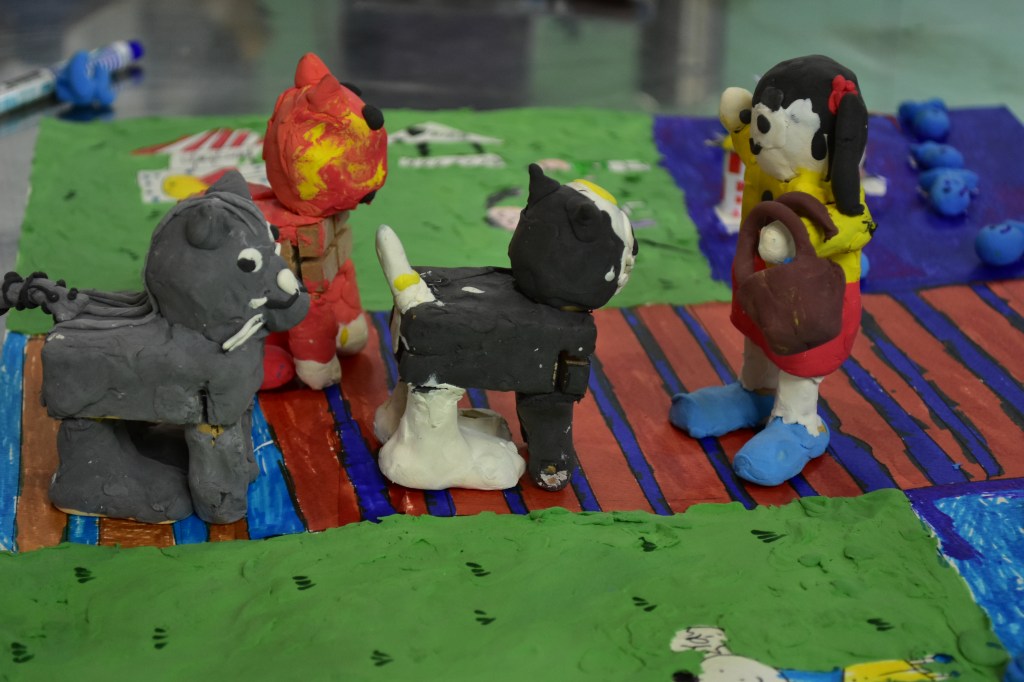
One group of students created a simple story about a girl feeding fish to three kittens by the sea.
The story itself was not particularly complicated, but the children spent a surprising amount of time building the world around it.
The seaside was not just a beach. It had a harbor. There were shops nearby. People might be walking around the waterfront. The students imagined a place that felt alive.
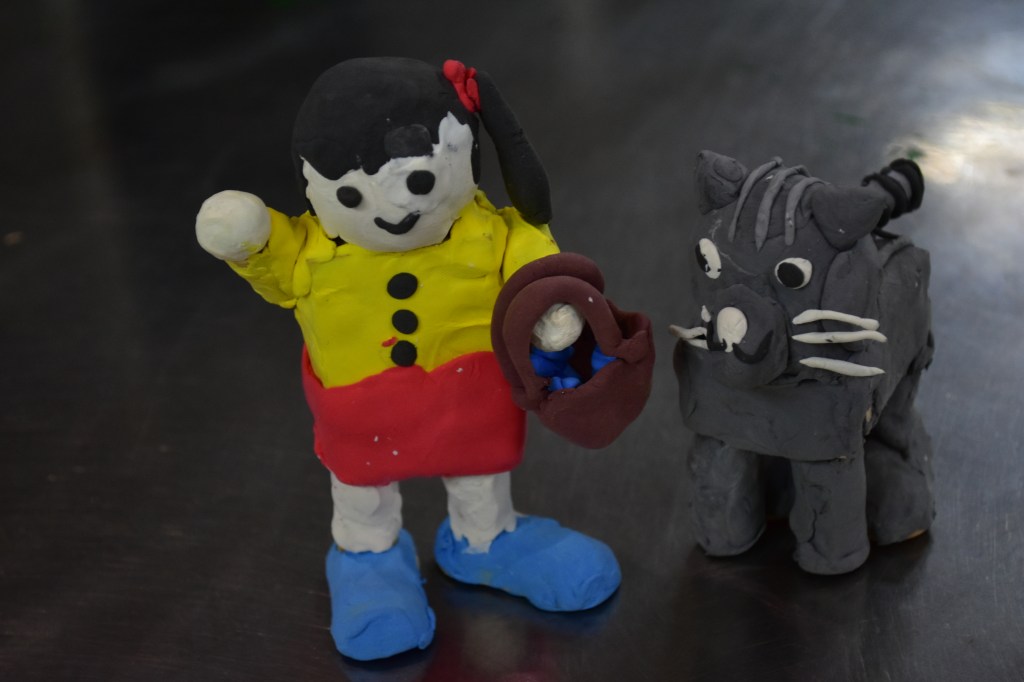
The main character was not simply “a girl" either. She had a specific hairstyle, specific clothes, and a clear personality in the children’s minds.
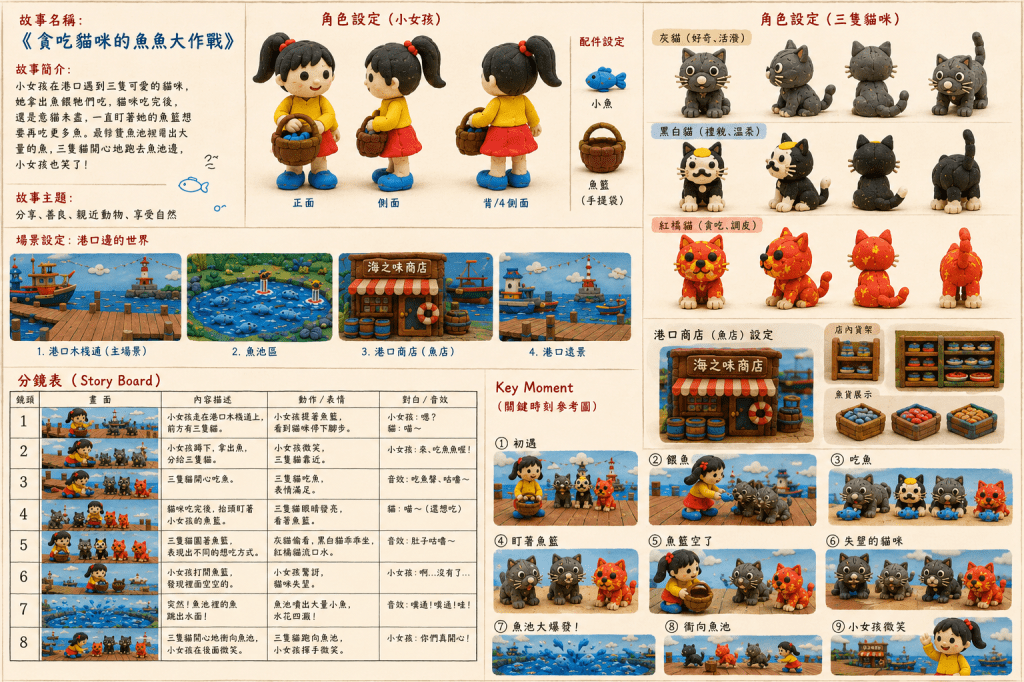
Because we spent quite a bit of time moving step by step through character design and scene design before generating any videos, the children had already developed a surprisingly clear picture of what their story should look like.
有一組孩子設計了一個關於餵貓吃魚的小故事。
故事其實很簡單,一位女孩在海邊餵三隻小貓吃魚。
但讓我印象深刻的,反而是孩子們花了很多時間去建構這個故事發生的世界。
那個海邊不只是海邊而已。
有碼頭、有商店,也有她們想像中的海港生活。
而主角也不只是「一個女孩」。
她有固定的髮型、固定的服裝,甚至在孩子們心中已經有了一個很清楚的個性與形象。
由於課程安排上,我們先完成角色設計,再進行場景設計,最後才開始生成影片。因此當影片真正開始製作時,孩子們其實已經對故事的樣貌有了相當清楚的想像。
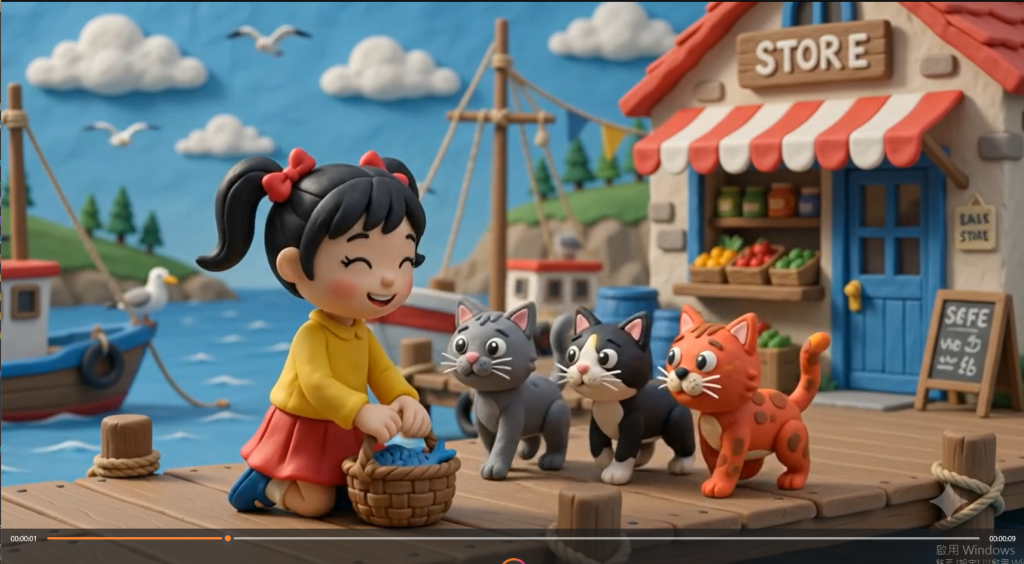
When the first version of the animation was finally generated, everyone gathered around the screen excitedly
Then, almost immediately, one of the students said:
“Teacher, her hair is wrong."
The character was supposed to have a ponytail.
Instead, in one scene, she suddenly appeared with two braids.
To be honest, if the children had not pointed it out, I probably would not have noticed.
But they noticed instantly.
And they cared about it a lot.
Because to them, this was not just an AI-generated character.
This was their character.
第一次生成影片的時候,孩子們都非常興奮。
大家圍在螢幕前,看著自己設計的故事終於動了起來。
結果沒多久,就有孩子喊了一聲:
「老師,她的頭髮不對!」
原本設定是馬尾的女孩,在某個鏡頭裡突然變成了雙辮子。
老實說,如果不是孩子們指出來,我大概不一定會發現。
但她們立刻就看到了。
而且非常在意。
因為對她們來說,這並不是 AI 隨機生成的一個角色。
而是她們自己創造出來的人物。
既然是同一個人,怎麼可以一下是馬尾,一下又變成雙辮子呢?
The next few lessons were unexpectedly spent fixing that ponytail.
Yes, a ponytail.
We rewrote prompts. We generated new versions. We added more descriptions. We tried again and again.
Yet the character kept changing between scenes.
Eventually, we found a better solution.
Instead of describing the character only with text, we created a complete character design sheet showing the girl from different angles. Once those reference images were included in the workflow, the consistency improved dramatically.
When the new version appeared on screen, the students immediately smiled.
“That’s her."
At that moment, I realized that the most important thing happening in the classroom was not video generation.
It was judgment.
接下來的幾堂課,我們花了不少時間在處理那條馬尾。
沒錯,就是一條馬尾。
我們反覆修改提示詞,增加更多細節,重新生成影片,一次又一次地嘗試。
但角色還是不斷在不同鏡頭之間產生變化。
後來我們換了一種方式。
先建立完整的人物設定稿,把角色的正面、側面和不同角度都整理出來,再把這些設定圖作為影片生成的重要參考。
結果很快就有了改善。
當新的版本出現在螢幕上時,孩子們幾乎立刻就笑了出來。
「對,就是她!」
那一刻,我忽然覺得,課堂裡真正重要的事情,可能根本不是影片生成本身。
而是判斷。
“You can’t depend on your eyes when your imagination is out of focus.”
— Mark Twain
The children were not impressed simply because the AI created something beautiful.
They were comparing the result with the image they already had in their minds.
They knew when something felt right.
They knew when something felt wrong.
And because they cared, they kept refining it.
Before this course began, I often wondered what creative education should look like in a future where AI can generate images, videos, music, and stories with increasing ease.
These past few weeks have not given me a complete answer.
But they have offered a clue.
Perhaps the goal is not to teach children how to generate content.
Perhaps the goal is to help them build a clearer imagination, develop their own standards, and learn how to recognize the difference between “good enough" and “what I truly wanted."
Because when creating becomes easier, knowing what you want to create may become the most valuable skill of all.
孩子們並不是因為 AI 生成了一段漂亮的影片而感到滿足。
她們其實一直在比較。
比較眼前看到的內容,和自己心裡原本想像的樣子是否一致。
她們知道哪裡對。
也知道哪裡不對。
而正因為在意,所以願意一直修改下去。
課程開始之前,我在想。
如果有一天,生成影片變得像按下一個按鈕一樣容易,那我們到底還要教孩子什麼?
這幾週的課程並沒有給我完整的答案。
但似乎給了我一個方向。
或許重要的從來不是如何生成內容。
而是孩子能不能建立自己的想像。
能不能發展出自己的判斷標準。
能不能分辨什麼只是「看起來差不多」,而什麼才是真正符合自己期待的作品。
因為當創作的技術門檻越來越低的時候,知道自己想創造什麼,或許才會成為最重要的能力。

